The global skincare OEM/ODM market has reached unprecedented growth, with the contract manufacturing sector projected to exceed $80 billion by 2026. This comprehensive guide walks you through every stage of the OEM/ODM journey—from initial concept to final delivery, covering formulation, testing, production, regulatory compliance, and logistics.
Skincare OEM/ODM Manufacturing Process 2025: From Formula to Delivery
Published: January 19, 2026
Author: MEIMISHI R&D Team
Reading Time: 12 minutes
Category: Business Guide
Introduction
The global skincare OEM/ODM market has reached unprecedented growth, with the contract manufacturing sector projected to exceed $80 billion by 2026. For entrepreneurs and established brands alike, understanding the complete manufacturing process is crucial for launching successful skincare products. Whether you're a startup founder with a revolutionary formula or an established brand looking to expand your product line, this comprehensive guide will walk you through every stage of the OEM/ODM journey—from initial concept to final delivery.
The choice between OEM (Original Equipment Manufacturing) and ODM (Original Design Manufacturing) can significantly impact your brand's trajectory. OEM manufacturing allows you to bring your unique formulation to life with a manufacturer's production expertise, while ODM manufacturing offers pre-developed, market-tested formulas that can be customized and branded under your label. This guide covers both pathways, providing you with the knowledge to make informed decisions at every step.
Understanding OEM vs ODM: Choosing Your Manufacturing Path
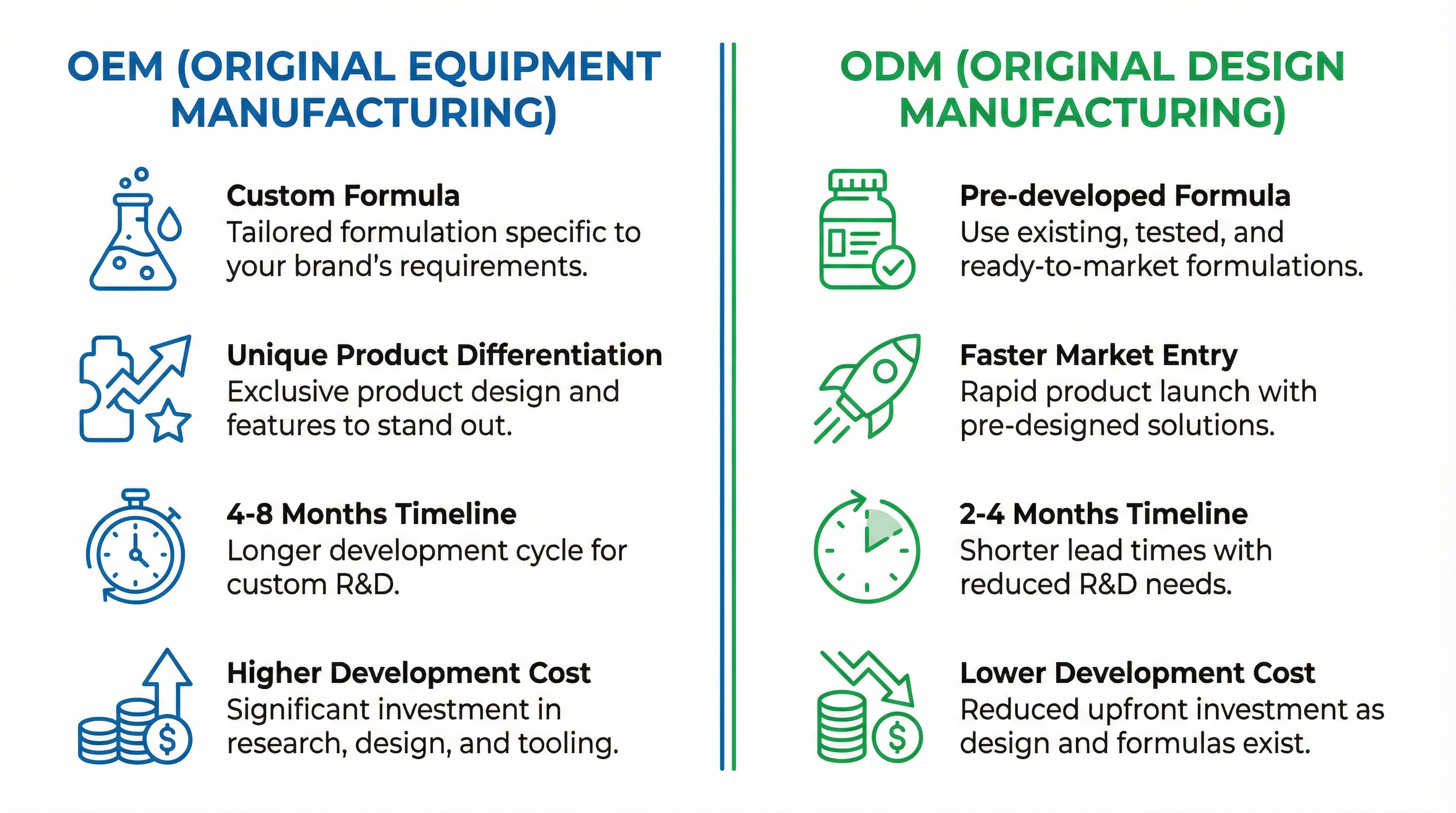
Before diving into the manufacturing process, it's essential to understand the fundamental difference between OEM and ODM partnerships, as this choice will shape your entire product development journey.
| Aspect |
OEM (Original Equipment Manufacturing) |
ODM (Original Design Manufacturing) |
| Formula Source |
Custom formula provided by your brand |
Pre-developed formula from manufacturer |
| Development Time |
4-8 months |
2-4 months |
| Upfront Cost |
Higher (R&D, testing, validation) |
Lower (formula already developed) |
| Product Differentiation |
Unique, exclusive formulation |
Shared formula with customization options |
| Best For |
Established brands, unique positioning, proprietary ingredients |
Startups, rapid market entry, proven formulas |
| Risk Level |
Higher (untested formula) |
Lower (market-proven formula) |
| Typical MOQ |
3,000-10,000 units |
1,000-5,000 units |
Making the Right Choice
The decision between OEM and ODM isn't always binary. Many successful brands start with ODM to establish market presence quickly, then transition to OEM as they scale and develop proprietary formulations. Consider your budget, timeline, technical expertise, and long-term brand strategy when making this critical decision.
Stage 1: Consultation and Concept Development (2-4 Weeks)
The foundation of successful product manufacturing begins with thorough consultation and concept development. This initial phase sets the direction for your entire project and establishes the partnership framework with your manufacturer.
Initial Discovery Meeting
Your first interaction with an OEM/ODM manufacturer should be a comprehensive discovery session where you articulate your brand vision, target market, and product objectives. Professional manufacturers will ask detailed questions about:
- ✓ Target demographic: Age range, skin types, concerns, and purchasing behavior
- ✓ Market positioning: Premium, mid-range, or mass-market pricing strategy
- ✓ Distribution channels: E-commerce, retail, professional salons, or multi-channel
- ✓ Regulatory requirements: Target markets and their specific compliance needs
- ✓ Budget parameters: MOQ (Minimum Order Quantity), per-unit cost targets, and total investment capacity
This conversation helps the manufacturer understand your needs and propose appropriate solutions, whether OEM or ODM.
Stage 2: Formulation Development and Testing (4-12 Weeks)
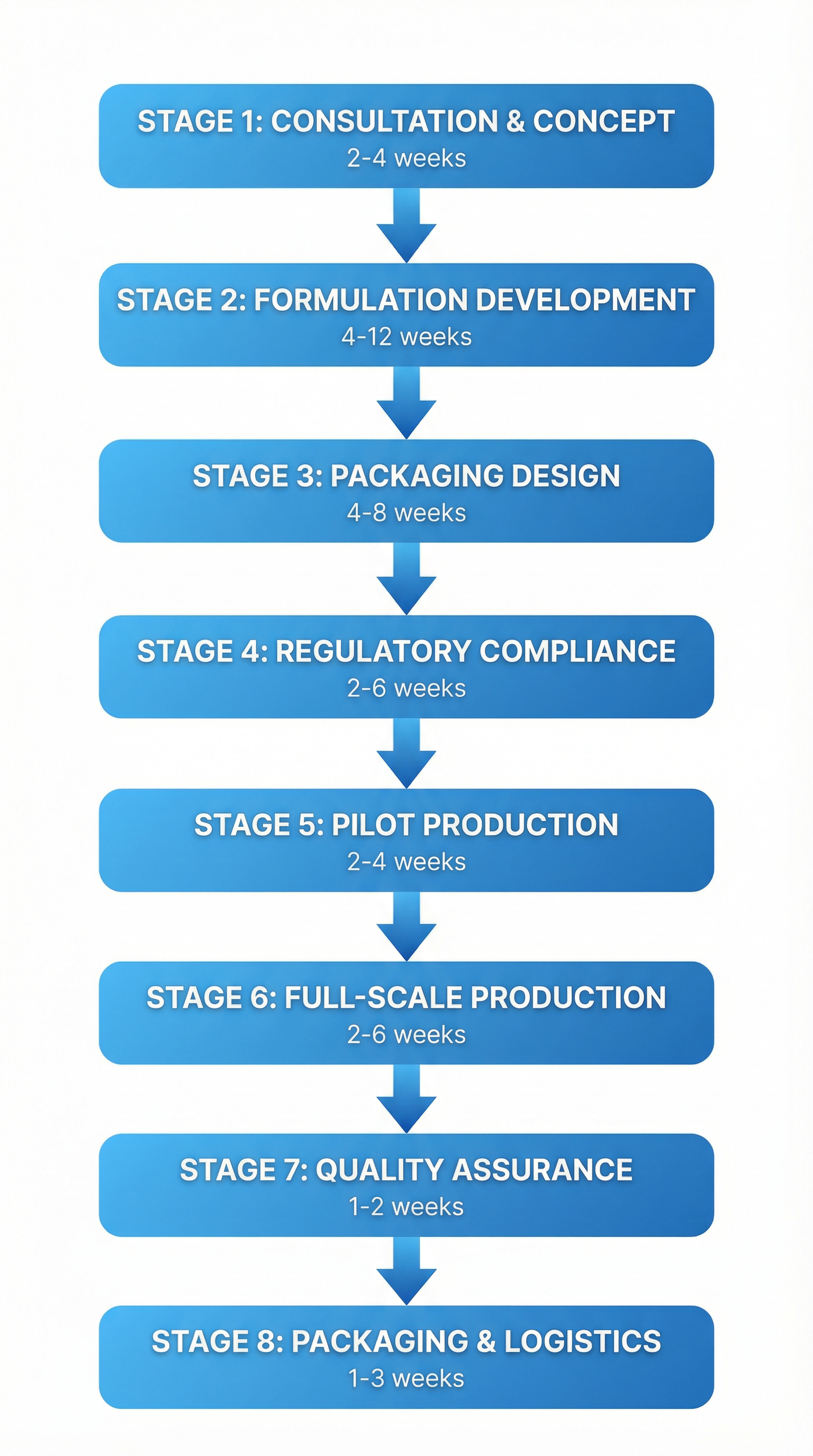
The formulation stage is where your concept transforms into a tangible product. The timeline and complexity vary significantly between OEM and ODM pathways.
| Phase |
OEM Timeline |
ODM Timeline |
Key Activities |
| Formula Design |
2-3 weeks |
N/A |
Initial formula creation, ingredient sourcing |
| Sample Production |
1-2 weeks |
1 week |
Lab-scale batches, initial testing |
| Stability Testing |
4-8 weeks |
Already completed |
Temperature cycling, shelf-life validation |
| Refinement |
2-4 weeks |
1-2 weeks |
Formula adjustments, sensory optimization |
| Total Time |
6-12 weeks |
2-4 weeks |
- |
Stage 3: Cost Breakdown and Budget Planning
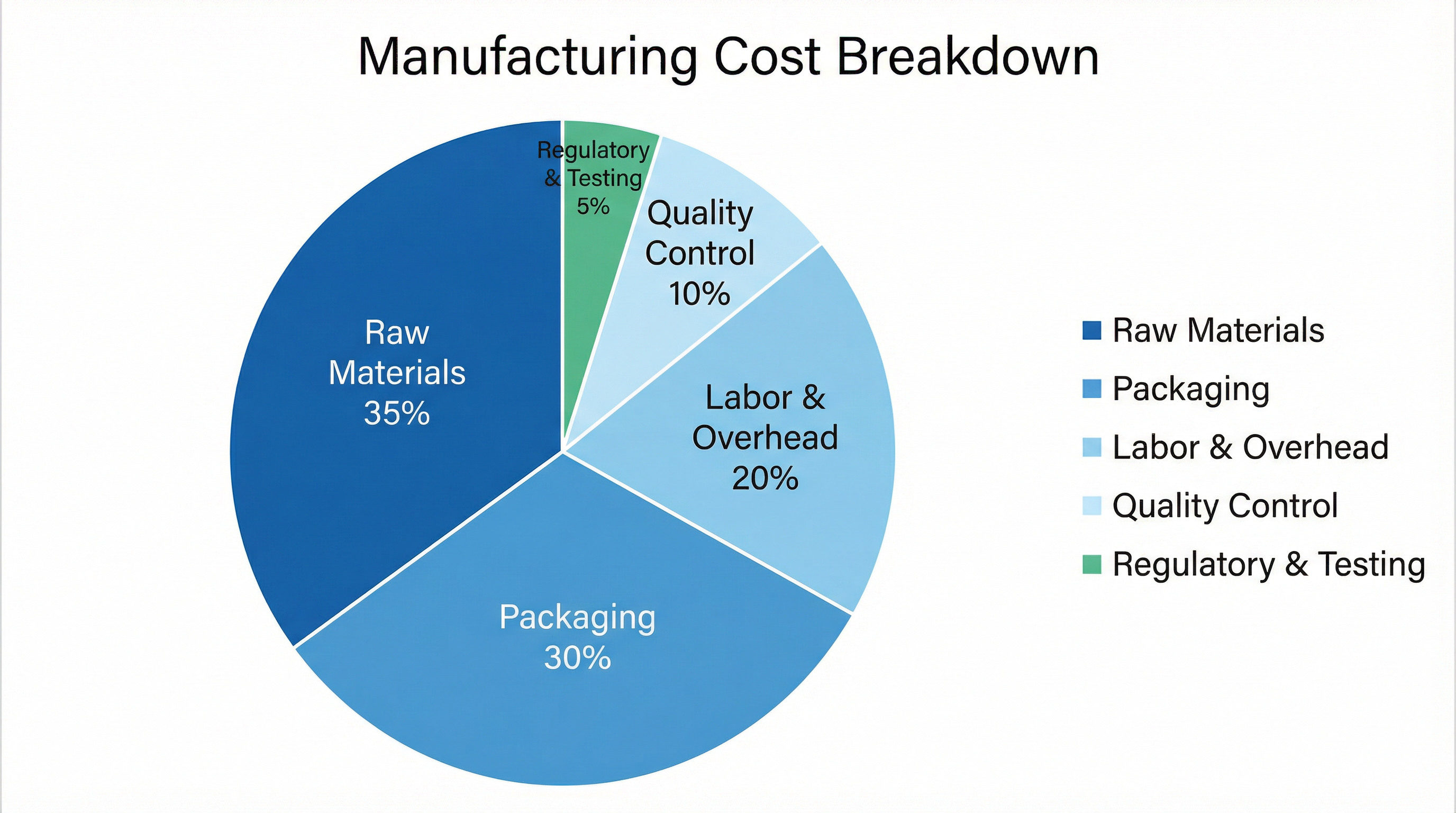
Understanding the complete cost structure is essential for accurate budget planning. Here's a comprehensive breakdown of typical OEM/ODM manufacturing costs:
| Cost Component |
Percentage of Total |
Typical Range (per unit) |
Notes |
| Raw Materials |
35-45% |
$1.50-$4.00 |
Varies by ingredient quality and sourcing |
| Packaging |
25-35% |
$0.80-$3.00 |
Primary + secondary packaging |
| Manufacturing Labor |
10-15% |
$0.40-$1.20 |
Production, filling, assembly |
| Quality Control |
5-8% |
$0.20-$0.60 |
Testing, documentation, compliance |
| Overhead & Profit |
15-20% |
$0.60-$1.50 |
Facility, utilities, margin |
| Total Per Unit |
100% |
$3.50-$10.30 |
Based on 5,000-unit MOQ |
Stage 4: Timeline Comparison
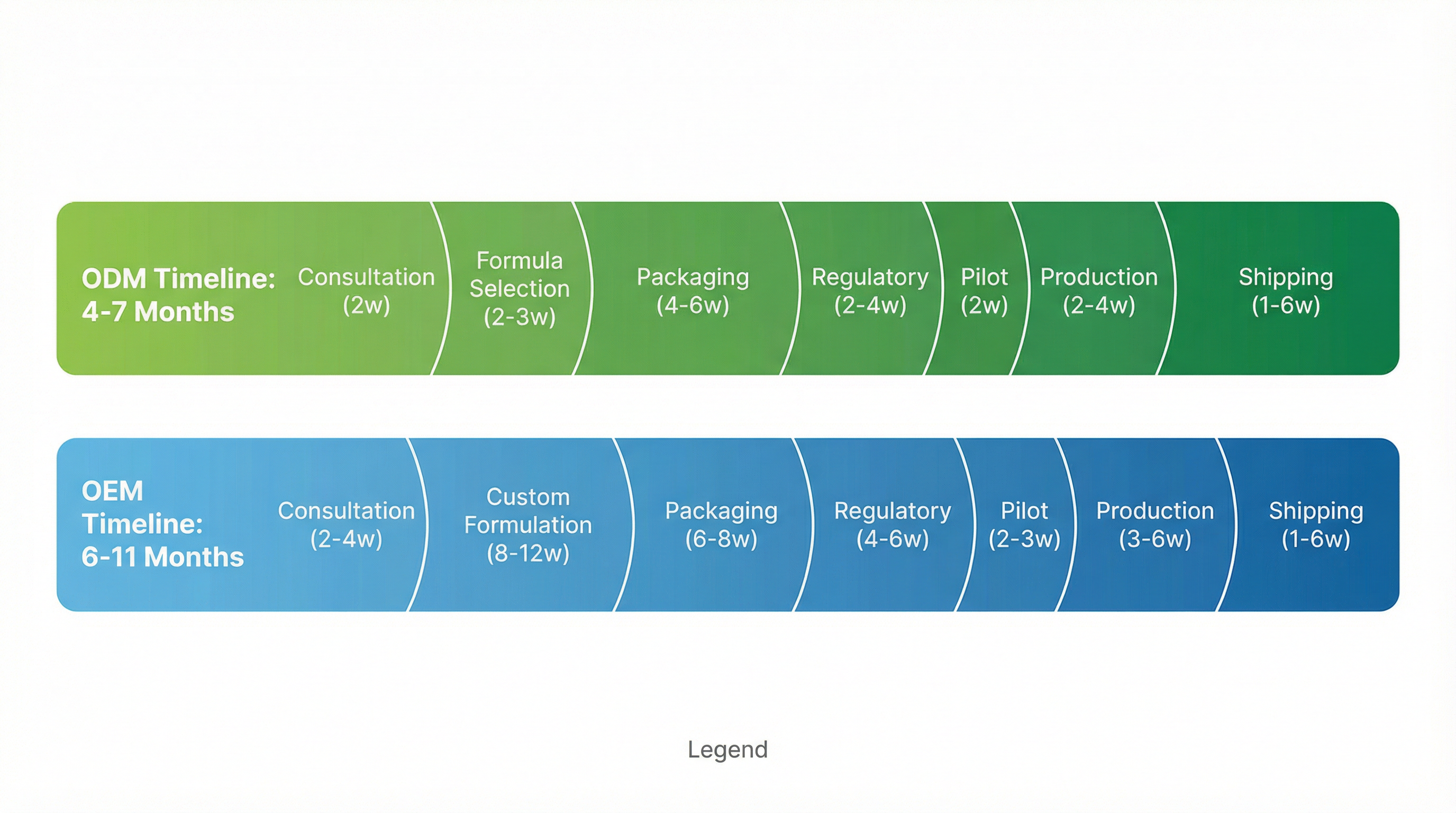
Understanding realistic timelines helps you plan product launches and manage stakeholder expectations effectively.
| Manufacturing Stage |
OEM Timeline |
ODM Timeline |
| Consultation & Concept |
2-4 weeks |
2-3 weeks |
| Formulation & Testing |
6-12 weeks |
2-4 weeks |
| Packaging Development |
4-8 weeks |
3-6 weeks |
| Regulatory Compliance |
4-12 weeks |
2-4 weeks |
| Production & QC |
3-6 weeks |
3-5 weeks |
| Logistics & Delivery |
2-4 weeks |
2-4 weeks |
| Total Timeline |
21-46 weeks (5-11 months) |
14-26 weeks (3-6 months) |
Conclusion
The skincare OEM/ODM manufacturing process is a complex but manageable journey when you understand each stage and make informed decisions. Whether you choose OEM for unique formulation control or ODM for faster market entry, success depends on selecting the right manufacturing partner, maintaining clear communication, and staying committed to quality at every step.
Ready to start your skincare manufacturing journey? Contact MEIMISHI today for a free consultation and discover how our 15+ years of experience can help bring your brand vision to life.